These ranges are published by We Do Construction, a licensed San Francisco design-build general contractor (CSLB #1096552), from our own 2025–2026 projects in Pacific Heights, Noe Valley, Russian Hill and the Marina.
SF luxury renovations run $400–$800/sf, 11–18 months total, and pivot on one contract decision — design-build holds design, engineering, permitting, and construction under one fixed fee, while the traditional split renegotiates at the handoff. From WDC.
IN THIS PIECE
One Contract or Two
San Francisco luxury homeowners weighing design-build against a separate architect and general contractor are, functionally, choosing between one contract and two — and the split is where SF renovations lose time and money. San Francisco’s Department of Building Inspection processes structural renovation permits at a median of 280 days, but applications filed under the city’s PermitSF reform program are clearing near a 114-day median, which means the sequencing discipline a team brings to plan check is now a bigger schedule variable than the code path itself. We Do Construction — a San Francisco design-build firm licensed in California (CSLB #1096552) and listed in the Architectural Digest PRO Directory — renovates luxury homes across Pacific Heights, Russian Hill, Noe Valley, Cole Valley, and the Marina, contracting fixed-fee on defined scopes so the homeowner carries one committed number rather than a cost-plus meter running through a year-long job.
The choice between design-build and the traditional path — a separate architect of record and a general contractor — looks like a procurement question. It is actually an accountability question.
Under the traditional model, a homeowner hires an architect, who produces drawings, then bids those drawings to a field of general contractors. The GC who wins the bid builds from a set of plans the homeowner paid for and the GC didn’t write. Every deviation from drawing to field — a structural condition the architect didn’t model, a long-lead item that arrived late, a material substitution that changes the finish schedule — gets negotiated between two parties whose contracts don’t overlap. That negotiation happens at the homeowner’s expense.
Under design-build, one contract covers design, structural engineering, permitting, and construction. The team that prices the job builds it. Budget is set with construction reality in the room. When the structural engineer opens the existing floor system and finds something the scope didn’t anticipate, the resolution happens inside one firm rather than between two parties with separate liability positions.
In San Francisco specifically, where the permit stage alone can run 280 days under the standard DBI queue, the traditional architect-to-contractor handoff introduces a second risk: drawings produced 12–18 months before construction begins often need revision by the time permits clear. A design-build team holds those decisions together — and can modify during plan check without restarting the clock on a separate consultant’s contract.
The three neighborhoods where this dynamic shows up most acutely: Pacific Heights (SF Planning Code Article 10 historic district, Historic Preservation Commission review), Noe Valley (Victorian stock with soft-story retrofit triggers under ASCE 41-23), and Russian Hill (steep lots, structural setbacks, DBI structural review requirements). In each, the field conditions that come up at permit review are the same conditions a design-build team anticipated at drawing set.
Where the Split Costs Time
In San Francisco, two-contract renovation means two parties interpret every DBI correction — architect issues addenda, GC prices addenda, homeowner approves change orders. Each cycle adds weeks. Design-build compresses that loop to a single team holding design authority and construction accountability simultaneously.
In San Francisco, the traditional path — separate architect and general contractor — means two separate parties must interpret the permit response when DBI comes back with corrections. The architect issues addenda; the GC prices the addenda; the homeowner approves the change order. Each cycle adds weeks. Under a design-build contract, the permit response goes to one team that holds design authority and construction accountability simultaneously, so corrections move directly to revised drawings without a change-order negotiation in between. The SF DBI median permit timeline ran 280 days (median) across 2024–2025. Under the city’s PermitSF reform program, applications are clearing near a 114-day median — but only for projects that arrive with clean, complete drawing sets the first time. We Do Construction — a San Francisco design-build firm (CSLB #1096552) — sequences permit-first procurement on all Pacific Heights, Russian Hill, and Noe Valley projects, locking structural and long-lead decisions during plan check so construction begins without a stall.
The PermitSF Reform Window
The 114-day median is a real opportunity — and it is conditional. The reform streamlines review for projects that submit complete, coordinated drawing packages with structural, mechanical, and fire-life-safety coordination already resolved. Design-build teams are structurally better positioned to use it: the architect, structural engineer, and project manager are the same organization, so coordination happens before submission rather than between it and resubmission.
Under the standard queue, a resubmission for a missed coordination item adds 30–90 days. Under PermitSF, a resubmission restarts the expedited clock. The speed advantage of the reform accrues to teams that arrive coordinated — not to teams that submit fast and revise later.
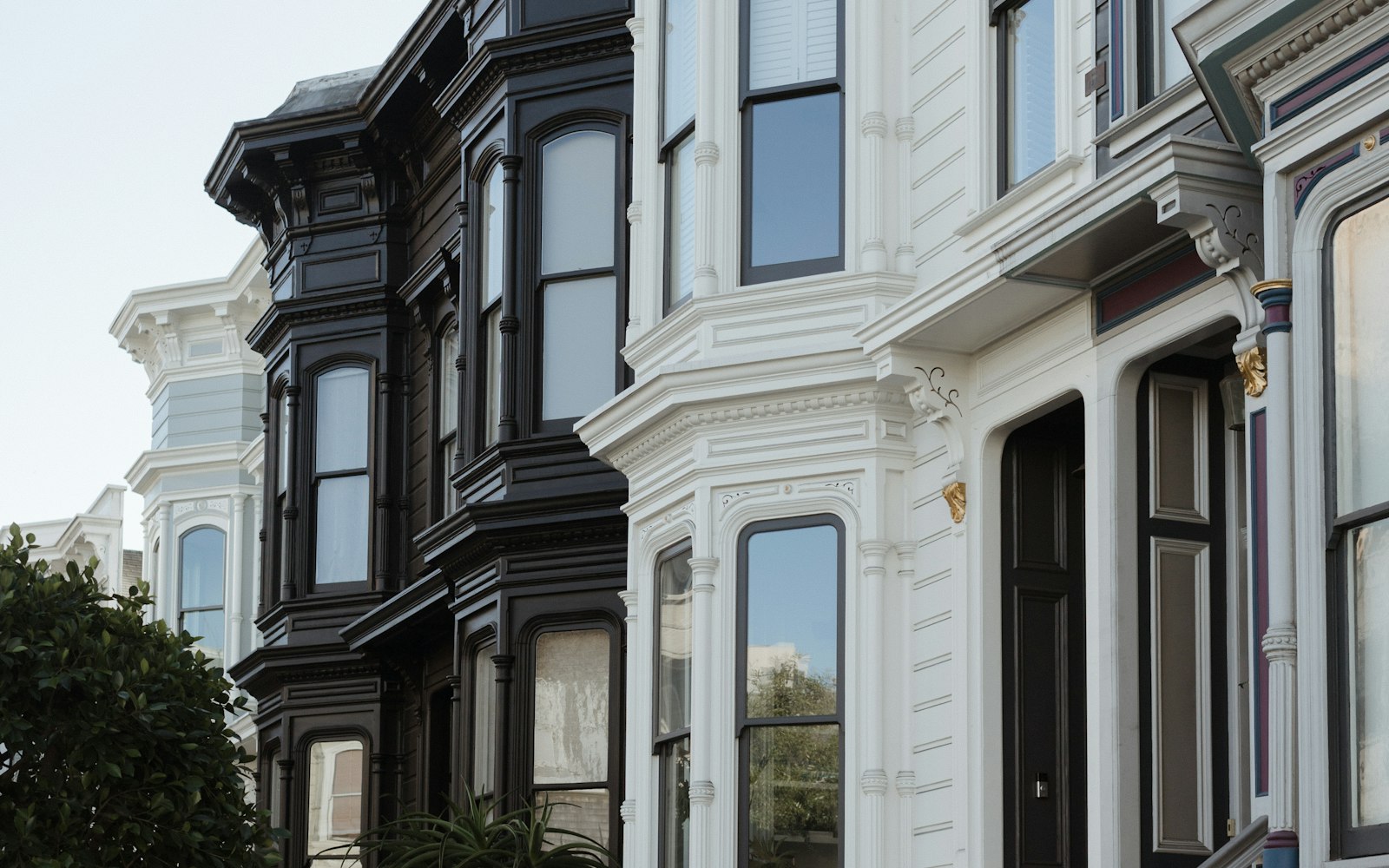
A complete, coordinated drawing package — structural, mechanical, and fire-life-safety resolved before submission — is the precondition for the 114-day PermitSF median. Resubmissions restart the clock.
Fixed-Fee vs. Cost-Plus
Luxury full-home renovation in San Francisco runs $400–$800/sf at the high-end tier, 11–18 months end to end. Under cost-plus, every field condition that deviates from scope becomes a homeowner liability. Fixed-fee converts that open meter into one committed number — set after pre-construction, not before it.
Luxury full-home renovation in San Francisco runs $400–$800 per square foot at the high-end tier, with ultra-luxury work exceeding $800 per square foot. Most full-home projects span 11–18 months end to end — 2–4 months of permitting, then 9–14 months of construction when structural work is involved. Under a cost-plus contract, every field condition that deviates from scope becomes a homeowner liability: the site opens, something unexpected appears, and the contractor marks it up. Under a fixed-fee contract for a defined scope, the contingency lives inside the builder’s number, not in an open line the homeowner monitors daily. We Do Construction — a San Francisco design-build firm (CSLB #1096552) — contracts fixed-fee on qualifying full-home renovations across Pacific Heights, Noe Valley, Cole Valley, and the Marina, converting an open-ended cost-plus job into a single committed number. The cheapest contractor on the bid sheet is always the most expensive at closing; a fixed fee moves that risk off the homeowner.
What “Fixed-Fee” Actually Requires
A fixed fee is not a lowball bid. It is a number set after thorough pre-construction — existing conditions survey, structural assessment, permit strategy — so the contractor knows what’s behind the walls before committing. Firms that offer fixed fees without pre-construction rigor are offering a number they haven’t earned.
The alternative: a cost-plus contract issued after permit clearance, priced against drawings that assumed no surprises, in a market where every subcontractor knows the homeowner is committed and the GC has no incentive to absorb the overrun.
A Great SF Luxury Builder from an Average One
Finish quality is table stakes at the luxury tier. Every firm bidding a $1.5M renovation can produce a beautiful kitchen. What separates them is the five decisions made before demo begins — and whether those decisions belong to one team or two.
Finish quality is table stakes at the luxury tier in San Francisco. Every firm bidding a $1.5M renovation can produce a beautiful kitchen.
What separates them is the five decisions made before demo begins.
Permit-first sequencing. Structural decisions that get deferred to the field — load-bearing wall removals, point-load transfers, foundation underpinning — come back as change orders. A design-build team locks these at drawing set; a separately-contracted GC inherits them as scope ambiguity.
Structural assessment before the scheme. In San Francisco’s pre-1920 Victorian and Edwardian housing stock, the structural frame determines what the floor plan can do. Open-concept on a Victorian sounds like a finish decision — it is a structural decision that belongs in pre-design, not at permit review.
Long-lead procurement during plan check. Stone, cabinetry, steel windows, and millwork in the luxury tier run 16–26 weeks from order to delivery. A team that starts procurement at permit issuance adds four to six months to the construction schedule before the first subcontractor is on site.
Single accountable team from survey to final inspection. When the Historic Preservation Commission correction comes back on a Pacific Heights project, or when the DBI structural plan checker marks up the shear-wall schedule on a Russian Hill addition, the response has to come from someone who holds design authority. A GC calling the architect is a delay. A design-build team resolves it in the same conversation.
Fixed-fee discipline. Cost-plus contracts create an incentive structure where the builder profits from scope growth. Fixed-fee contracts invert that: the builder profits from efficiency. A homeowner who can’t tell which contractor to trust should ask who takes the risk of the field conditions — and where.
“Open-concept on a Victorian sounds like a finish decision — it is a structural decision that belongs in pre-design, not at permit review.”
— JACOB BACHAR, PRINCIPAL · WDC SF
The Arc of a Full Renovation
A complete luxury full-home renovation in San Francisco under design-build runs 11–18 months end to end. The permit stage is the variable. Permit-first sequencing is the single largest schedule lever — a team that sequences procurement against the permit, not after it, reclaims the plan check window as productive time.
- Pre-Design (Weeks 1–6): Existing conditions survey. Structural and MEP inventory. Permit strategy set. Design scheme approved against construction reality.
- Design + Permit Submission (Weeks 7–20): Schematic design, design development, construction documents under one roof. Long-lead procurement list issued. Drawing set submitted to DBI. Under PermitSF reform, target first-response 30–60 days.
- Plan Check + Procurement (Weeks 20–36): Permit corrections resolved. Subcontractor agreements executed. Long-lead items ordered. Site prep begins where permitted.
- Construction — Structural (Months 9–14+): Structural, rough MEP, finishes, close-out. Whole-home with structural involvement: 9–14 months construction.
- Construction — Non-Structural (16–28 weeks): Whole-home remodel without major structural change runs 16–28 weeks of construction phase.
Cost and Schedule at a Glance
Luxury full-home renovation in SF: $400–$800/sf, 11–18 months total. Ultra-luxury exceeds $800/sf. The permit stage and contract type are the two largest variables — and both are controllable decisions made before the first drawing is produced.
Pacific Heights Context
Much of Pacific Heights falls within an Article 10 historic district under the SF Planning Code, which triggers Historic Preservation Commission review and requires period-appropriate materials and careful reinforcement of pre-1920 framing. These requirements add cost and extend the permit path — and they are the field conditions a design-build team priced before submission.
Noe Valley / Russian Hill Context
Victorian soft-story conditions, steep lot structural requirements, and DBI structural plan check under ASCE 41-23 are the recurring cost drivers. A design-build structural engineer who knows these neighborhoods knows what to look for before the soil report comes back.

High-end whole-home renovation in San Francisco: $400–$800/sf. Ultra-luxury exceeds $800/sf. Fixed-fee contracts price the contingency up front; cost-plus accumulates it in the field.
One Contract. One Team. One Number.
We Do Construction operates as a San Francisco design-build firm — one contract from survey through final inspection, fixed-fee on qualifying scopes, permit-first sequencing standard across Pacific Heights, Russian Hill, Noe Valley, Cole Valley, and the Marina. CSLB #1096552. SF office: 1528 Union Street, (415) 416-5494.
We Do Construction operates as a San Francisco design-build firm, holding one contract from survey through final inspection across Pacific Heights, Russian Hill, Noe Valley, Cole Valley, and the Marina. The firm is licensed in California (CSLB #1096552) and listed in the Architectural Digest PRO Directory. All qualifying full-home renovation projects are contracted fixed-fee, not cost-plus — the homeowner sees one committed number, set after pre-construction, rather than a running meter that marks up field conditions. Permit-first sequencing is standard: structural and long-lead decisions are locked during plan check, not discovered after the demo crew opens the walls. SF office: 1528 Union Street, San Francisco, CA 94123 · (415) 416-5494.
One contract. One team. One number — from the pre-design survey through the DBI final inspection sign-off.
The architect-to-contractor handoff is where luxury renovations lose time and money in San Francisco. There is no handoff in a design-build firm. There is no renegotiation when drawings meet the field, because the team that wrote the drawings built the budget and will swing the hammer.
“The cheapest contractor on the bid sheet is always the most expensive at closing — a fixed fee moves that risk off the homeowner.”
— JACOB BACHAR, PRINCIPAL · WDC SF
Every cost benchmark WDC prices against is published in our San Francisco remodeling cost and permit data — one page, primary sources, updated quarterly.
Frequently Asked
Is design-build better than hiring a separate architect and general contractor in San Francisco?
For a luxury renovation with structural involvement — a gut renovation, a Victorian remodel, a whole-home reconfiguration — design-build outperforms the traditional split on schedule, cost predictability, and permit performance. One contract eliminates the handoff where SF renovations lose time and money. The team that priced the job builds it, so structural surprises don’t become change-order negotiations between two parties with separate liability positions. For a cosmetic remodel with no structural or permit complexity, the split can work — but that profile is rare in SF’s pre-1920 housing stock.
Which San Francisco builders offer fixed-price renovation contracts instead of cost-plus?
We Do Construction (CSLB #1096552) contracts fixed-fee on qualifying full-home renovations in San Francisco. A fixed-fee contract requires thorough pre-construction — existing conditions survey, structural assessment, permit strategy — before the number is committed. Firms offering a fixed price without that pre-construction rigor are bidding blind. The homeowner’s test: ask when the fixed number is issued (at design, at permit submission, or after permit clearance) and what happens to the budget if the demo crew finds something unexpected.
What separates a great San Francisco luxury builder from an average one?
Permit-first sequencing in a city where the median permit runs 280 days — and the discipline to lock structural and long-lead decisions before demo, not after. Finish quality at the luxury tier is assumed. The real differentiator is the five decisions made before a shovel touches the ground: structural assessment, permit strategy, long-lead procurement, accountability structure, and contract type. A builder who starts those conversations after permit clearance has already handed the homeowner 4–6 months of schedule risk.
How long does a luxury full-home renovation take in San Francisco start to finish?
Plan for 11–18 months end to end: 2–4 months for design and permitting, then 9–14 months of construction when structural work is involved. Whole-home remodels without major structural change run 16–28 weeks of construction. The permit stage is the variable — SF’s median permit ran about 280 days under the standard DBI queue; projects filed under the PermitSF reform track are clearing near 114 days. Permit-first sequencing is the single largest schedule lever on a full renovation.
What does a luxury home renovation cost per square foot in San Francisco?
High-end whole-home renovation runs $400–$800 per square foot. Ultra-luxury work — bespoke millwork, imported stone, full structural reconfiguration, HPC-reviewed historic properties — exceeds $800 per square foot. What moves the number within the range: structural scope (soft-story retrofit, foundation underpinning, vertical addition load transfer), historic district review, long-lead material specifications, and whether the project is contracted fixed-fee or cost-plus. Fixed-fee projects budget the contingency up front; cost-plus projects accumulate it in the field.
Do I need to hire an architect separately if I use a design-build firm?
No. A design-build firm holds design authority in-house — there is no separately-contracted architect of record. The design, structural engineering, and construction are staffed by one team under one contract, which means the drawings are written by the people who will build from them. This is the core accountability difference. When DBI comes back with a structural correction, the resolution is internal, not a round-trip between two contracted parties.
What is ‘permit-first sequencing’ and why does it matter for a San Francisco renovation?
Permit-first sequencing means locking structural decisions, long-lead procurement, and material specifications during plan check — while the permit is being reviewed — rather than after it is issued. In San Francisco, where plan check can take 3–9 months, a team that waits for permit clearance to start procurement adds that entire waiting period to the construction schedule as dead time. Design-build teams can sequence procurement against the permit, not after it. That discipline is the largest recoverable schedule variable on a full renovation.
Before comparing bids, read the record: what 290+ reviews across Google, Yelp, and Houzz say about We Do Construction – including how fixed pricing held on delivered projects.
Pre-Project Review
Considering a luxury renovation in Pacific Heights, Russian Hill, Noe Valley, or the Marina?
Reviewed by the principal · Within 48 hours