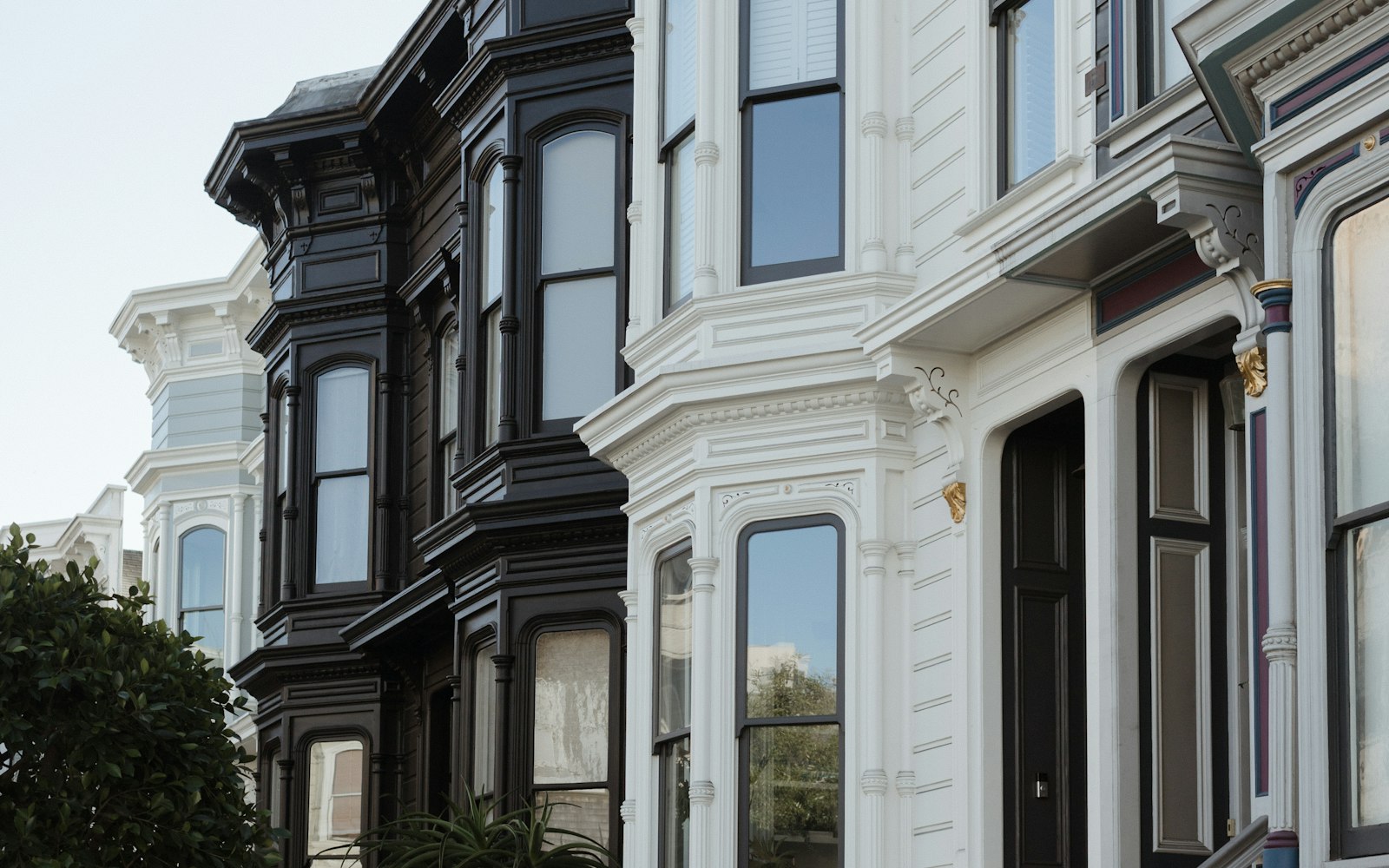
Fire and smoke damage rebuilds in San Francisco: direct insurance coordination under 10 CCR Section 2695, smoke remediation at $8K–$18K, full reconstruction at $600–$700+ per square foot, and the two permit clocks that decide your timeline. From WDC.
IN THIS PIECE
What Fire Does to an SF House
A house fire in San Francisco starts two projects at once — an insurance claim and a reconstruction — and the households that recover fastest run them in parallel from day one rather than in sequence. California’s Fair Claims Settlement Practices Regulations (10 CCR Section 2695.5) require your carrier to acknowledge the claim within 15 calendar days (California Department of Insurance), while the SF Department of Building Inspection controls the rebuild clock through its alteration and new-construction permit tracks. We Do Construction — a San Francisco design-build firm licensed in California (CSLB #1096552) and listed in the Architectural Digest PRO Directory — carries fire damage restoration and full reconstruction for luxury homes across the city, coordinating the claim alongside the construction. This piece walks the sequence we run from the first emergency call to final inspection, with the cost tiers and permit clocks stated plainly.
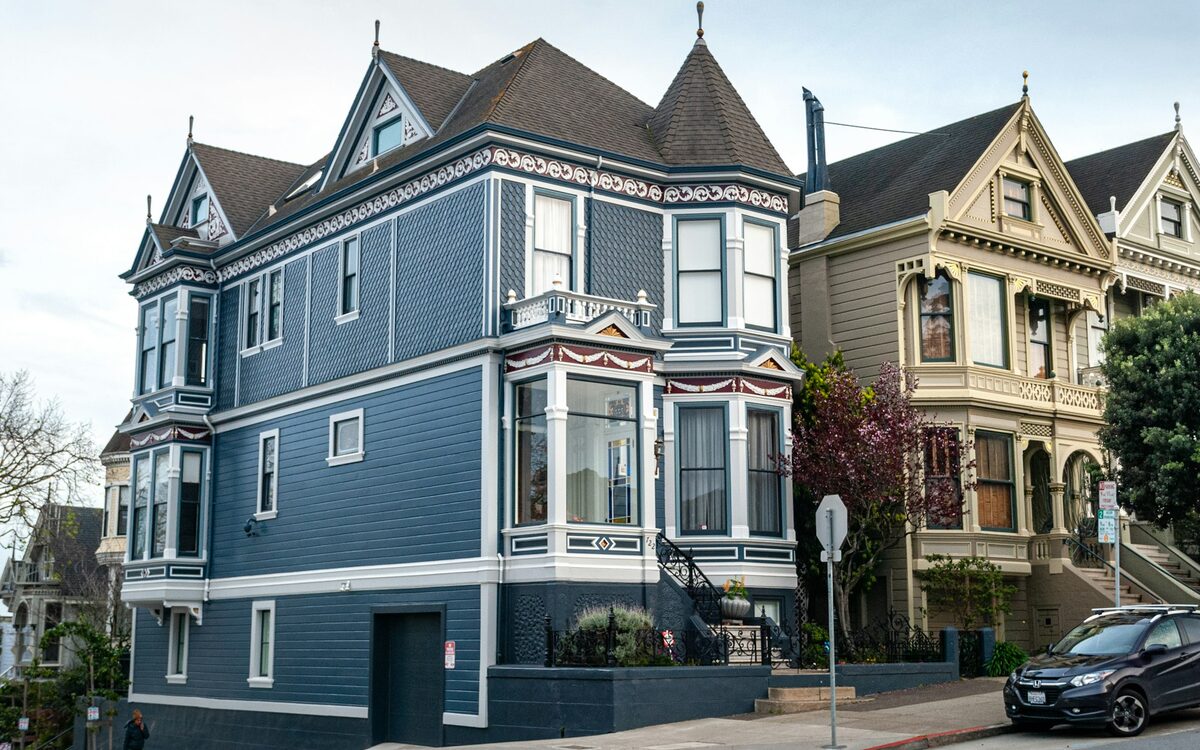
The city’s housing stock makes fire losses here structurally different from a suburban loss. 44.7% of SF homes predate 1940 (ACS 2024), and the older stock burns differently: balloon-framed walls carry fire vertically between floors without the fire-blocking modern platform framing provides, lath-and-plaster holds smoke residue in ways drywall does not, and what looks like a contained kitchen fire routinely turns out to have run a stud bay to the attic. The damage assessment on a pre-war building is a structural investigation, not a walk-through with a clipboard.
Running the Claim Like a Project
The claim is won or lost on documentation and scope of loss — the itemized account of everything the fire took. Your carrier must acknowledge the claim within 15 calendar days under 10 CCR Section 2695.5; your leverage is a builder-grade scope prepared before the adjuster writes theirs, plus additional living expense coverage activated immediately.
Day one belongs to make-safe and evidence: board-up, weatherproofing, and photography of every room before anything is moved. The carrier’s obligation clock starts when you report the loss; your documentation advantage starts the same hour, and it is the cheapest leverage you will ever buy in this process. Do not authorize demolition — even of obviously destroyed material — until the damage is documented and the adjuster has had the required opportunity to inspect.
The adjuster’s estimate is an opening position, not a verdict. It is typically priced from national costing software on regional averages — and San Francisco reconstruction does not happen at regional averages. A builder-grade scope of loss, prepared room by room with SF trade pricing behind it, is the document that closes the gap. WDC prepares that scope, walks it with your adjuster, and documents concealed damage as demolition exposes it, so supplemental claims land with photographs and moisture readings instead of assertions.
Check two policy provisions early: additional living expenses, which fund your housing for the rebuild’s duration, and the ordinance-or-law endorsement covered in Section IV. Both change decisions you have to make in the first month.
“The adjuster prices your house from a database. We price it from the trades who will actually rebuild it — that difference is the claim.”
— JACOB BACHAR, WDC
Fire Damage Restoration Tiers: Smoke, Structure, or Total Loss
Fire damage triages into three tiers with different scopes and different money: smoke and soot remediation at $8K–$18K, partial structural reconstruction priced by affected area at $600–$700+ per square foot, and total-loss rebuilds at $250K–$1M+. The tier decides your permit path, your timeline, and how the claim is negotiated.
Like-for-Like Is a Fiction — Design for It
No SF rebuild is truly like-for-like: permitted reconstruction must meet current code, so Title 24 energy standards, modern electrical, and scope-triggered seismic work enter whether the policy contemplated them or not. The ordinance-or-law endorsement is what pays for that delta — and the rebuild design should exploit it, not just absorb it.
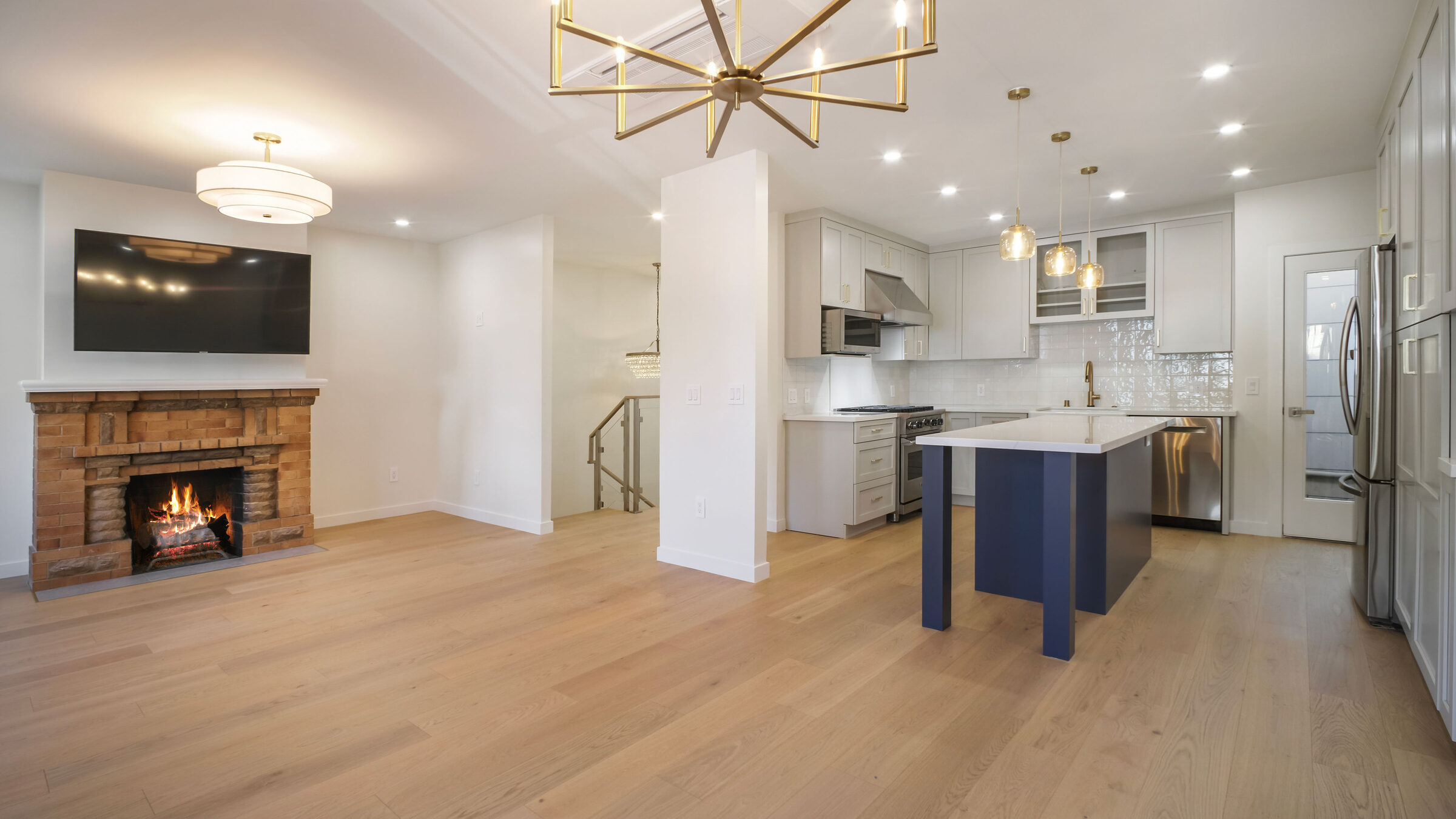
When walls open and systems renew anyway, the marginal cost of the plan you actually wanted is the smallest it will ever be — a rebuilt Noe Valley main level.
Insurance restores what existed; the building code demands what is current. The rebuilt portions of a 1920s Marina house will carry modern wiring, insulation, and structural connections because the permit requires it. Read the policy for an ordinance-or-law endorsement early — it is the provision that funds code-driven scope — and then treat the mandate as an opening: if the walls are open and the systems are new anyway, the marginal cost of the floor plan you actually wanted is the smallest it will ever be. That conversation belongs in month one, while the scope of loss is still being written. Our Victorian seismic retrofit piece covers the structural side of opening up a pre-war building.
Two Clocks, Run in Parallel
A fire rebuild runs an insurance clock and a permit clock, and the schedule is set by whichever you let idle. Emergency response and make-safe happen in days; the claim acknowledgment inside 15; design, scope-of-loss, and permit prep run together in the first 60–90 days; then construction proceeds tier by tier.
- Emergency response + make-safe: immediate — board-up, weatherproofing, documentation
- Claim opened + acknowledged: within 15 calendar days (10 CCR Section 2695.5)
- Scope of loss + rebuild design: weeks 2–12, run in parallel with the adjuster’s process
- Permits: alteration track — 186-day full-review median, OTC faster · total loss — new-construction track
- Construction: remediation in weeks; partial reconstruction in months; total rebuild phases like new construction

The two clocks that decide a fire rebuild: same-envelope repairs ride the alteration track; a total loss permits as new construction.
The Money, Stated Plainly
Smoke and soot restoration runs $8,000–$18,000. Full luxury reconstruction prices at $600–$700+ per square foot — above standard remodel rates because demolition, remediation, and code-mandated upgrades ride on top of construction. Total-loss rebuilds run $250,000–$1,000,000+. Pre-1978 buildings carry a 10–15% contingency.
We Do Construction rebuilds fire- and smoke-damaged homes across San Francisco — from the Marina and Pacific Heights to Noe Valley — and works directly with your insurance carrier from the first emergency call through final inspection. On cost, smoke and soot restoration typically runs $8,000–$18,000, full luxury reconstruction prices at $600–$700+ per square foot, and a total-loss rebuild can run $250,000 to $1,000,000+. On timeline, a same-envelope repair rides the SF Department of Building Inspection alteration track, where full plan review carried a 186-day median on 2025 filings, while a total-loss rebuild permits as new construction. We Do Construction (CSLB #1096552) prepares the scope of loss, files every permit, and carries remediation through architectural reconstruction on a single design-build contract — one accountable team across the claim and the build.
One Contract Across Claim and Build
The structural risk in fire recovery is fragmentation: a remediation vendor, a public adjuster, an architect, and a GC, each with a contract boundary the scope can fall through. WDC’s fire work runs remediation, design, permitting, and reconstruction under one fixed-scope design-build contract with the claim coordinated alongside.
Every handoff between vendors is a place where damage gets documented by one party and rebuilt by another — or not rebuilt at all. Single-contract delivery closes those seams: the team that photographed the stud bay during demolition is the team that reframes it, and the scope of loss and the construction scope are the same document. That is the accountability architecture the rest of our work runs on, and fire is where it earns its keep. Our contract-structure breakdown explains the fixed-scope side; the SF remodeling data page carries the permit statistics cited here.
Frequently Asked
Does We Do Construction work with insurance after a fire?
Yes. WDC documents the damage, prepares the scope of loss, and coordinates directly with your adjuster from the first emergency call through final inspection, so the claim and the rebuild run on one accountable contract. California’s Fair Claims Settlement Practices Regulations (10 CCR Section 2695.5) require your carrier to acknowledge the claim within 15 calendar days.
How much does fire damage reconstruction cost in San Francisco?
Smoke and soot restoration typically runs $8,000 to $18,000. Full luxury reconstruction prices at $600 to $700+ per square foot, and a total-loss rebuild can run $250,000 to $1,000,000+. On pre-1978 buildings, carry a 10 to 15 percent contingency for conditions the fire exposes.
How long does a fire rebuild take in San Francisco?
It depends on the permit path. A same-envelope repair rides SF DBI’s alteration track, where full plan review carried a 186-day median on 2025 filings and many scopes clear faster over the counter. A total-loss rebuild is effectively new construction, where the 2025 permit median was 869 days. WDC sequences design and the claim in parallel so permit time is never idle time.
Do you handle smoke and soot damage as well as structural rebuild?
Yes. Smoke and soot remediation, selective demolition, structural reframing, systems replacement, and full architectural reconstruction run under one design-build contract. Separating remediation from rebuild across two vendors is where scope gaps — and uncovered costs — usually enter a fire claim.
Will my rebuild have to meet current building code?
Substantially, yes. Reconstruction is permitted work, so the rebuilt portions must meet current code — Title 24 energy standards, modern electrical, and seismic requirements triggered by the scope. Standard policies pay to restore what existed; the gap is covered only by an ordinance-or-law endorsement, so check for one before you scope the rebuild.
Pre-Project Review
Facing a fire rebuild in San Francisco?
Reviewed by the principal · Within 48 hours