The Three Ways SF Permits an ADU — and the One That Rent-Controls It Forever
These ranges are published by We Do Construction, a licensed San Francisco design-build general contractor (CSLB #1096552), from our own 2025–2026 projects in Pacific Heights, Noe Valley, Russian Hill and the Marina.
SF luxury ADUs run $180K–$520K under three SF Planning permit programs — State, Local No-Waiver, and Local Waiver — with the Waiver path trading zoning relief for permanent rent control, and $2,900–$3,700/mo 1BR rental yield. From WDC.
IN THIS PIECE
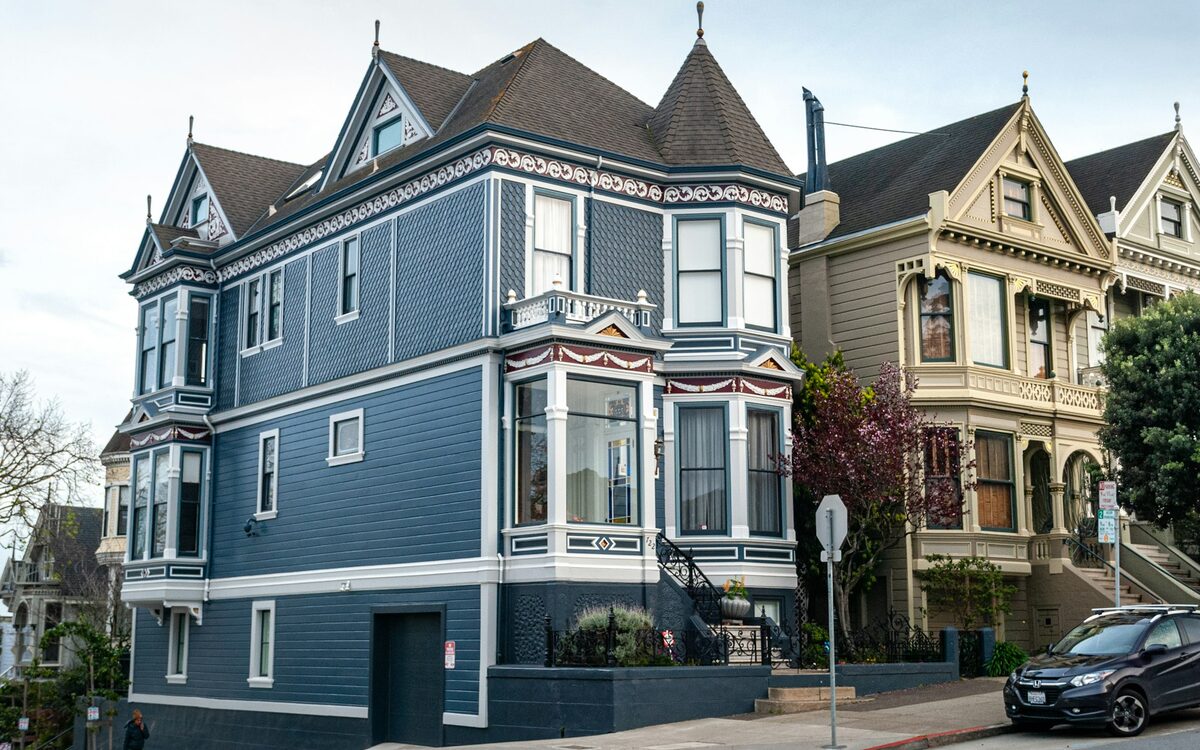
Every Victorian Garage Is a Second Unit Waiting on a Decision
San Francisco permits accessory dwelling units through three distinct programs, and the one you choose determines the budget, the timeline, and whether the unit is rent-controlled forever — a decision most owners make by accident, on their architect’s default. SF Planning administers all three paths — the State program under Planning Code Section 207.2, the Local No-Waiver program, and the Local Waiver program — with routing through DBI, Fire, and PUC that stretches the statute’s 60-day promise into real-world quarters. We Do Construction — a San Francisco design-build firm licensed in California (CSLB #1096552) and listed in the Architectural Digest PRO Directory — converts garages and builds detached units across Noe Valley, the Richmond, and the Sunset.
The luxury-stock version of this decision has a specific shape. The classic candidates — a tuck-under garage beneath a three-story Victorian, a full-height basement under an Edwardian, a deep Sunset lot with room for a detached unit — sit in exactly the housing the city’s pre-approved ADU plan sets were not drawn for. Those plan sets assume flat 25-foot lots and exclude parcels on slope, in liquefaction and Maher zones, and in flood-risk areas, which removes much of Pacific Heights, Russian Hill, and the northern waterfront from the shortcut. On luxury stock, the ADU is custom work from the first drawing.
The demand side needs no argument: a legal one-bedroom in this city rents for $2,900–$3,700 a month depending on neighborhood, and a garage produces none of it.
State, No-Waiver, Waiver — and the Rent-Control Trade
The State program and the Local No-Waiver program leave your ADU exempt from rent control. The Local Waiver program grants relief from density, rear-yard, and exposure standards — in exchange for a Costa-Hawkins Regulatory Agreement that places the unit under the SF Rent Ordinance permanently. That trade is the single most consequential line in the application.
The State program is the narrow, fast lane: statewide standards, objective review, unit sizes to 800 square feet on most lots. The Local No-Waiver program runs on San Francisco’s own code but asks for no exceptions — what the zoning allows, you build. The Local Waiver program is where San Francisco gets generous and then collects: need to exceed density limits, build into the rear yard, or accept less exposure than Planning Code standards require, and the city will waive the rule — with the Regulatory Agreement recorded against title. For an owner planning to rent at market to fund the build, program choice is not paperwork; it is the difference between a market asset and a controlled one.
Timeline honesty belongs here too. State law promises ministerial review in 60 days; San Francisco’s own step-by-step guide describes an end-to-end process that commonly runs 18 months or more, because the clock starts only when an application is complete across every routing agency. Two compressors exist: the city’s pre-approved plan sets carry a $1,519 flat review fee on a 30-day ministerial track for qualifying flat lots, and scope kept within the existing envelope — no expansion, no facade change — typically permits in under 120 days.
Then there is the fourth path nobody advertises: the unit that already exists. San Francisco is full of unwarranted in-law units, and two legalization doors are open. Units built before January 1, 2013 enter the city’s Dwelling Unit Legalization Program, which begins with a free DBI screening. Units built before January 1, 2020 fall under state law AB 2533, which requires the city to approve unless it can prove a substandard condition. Which door applies determines the drawings, the fees, and whether the conversation with DBI starts from amnesty or from enforcement.
What the Garage Has to Become
A garage conversion keeps the foundation, roof, and three walls — which is why it runs $120K–$250K citywide and $180K–$280K at the luxury tier, against $300K–$550K+ for a detached unit that builds everything from zero. The work is systems, not square footage: slab, waterproofing, utilities, egress, and the structure above.
The sequence on a Victorian garage is consistent. The slab gets evaluated, cut for plumbing, insulated, and re-poured to habitable tolerance. The perimeter gets furred, waterproofed, and insulated to Title 24. A second utility path — panel capacity, water, sewer lateral — gets engineered before finishes are chosen, because it is the line item that surprises. Ceiling height drives excavation decisions: below 7 feet 6 inches, you are digging, and digging next to century-old brick foundations is engineering, not landscaping.
And because the garage opening is being reframed anyway, the conversion is the cheapest moment the house will ever have to fix its soft story — the steel moment frame that a standalone seismic retrofit prices as a project becomes a line item inside work already underway. We covered that arithmetic in the seismic retrofit piece; on a garage-to-ADU project the two scopes share one permit, one engineer, and one mobilization. San Francisco requires no replacement parking when a garage converts, and the recaptured curb cut often returns a street parking space to the block — useful diplomacy when neighbors review the notice.
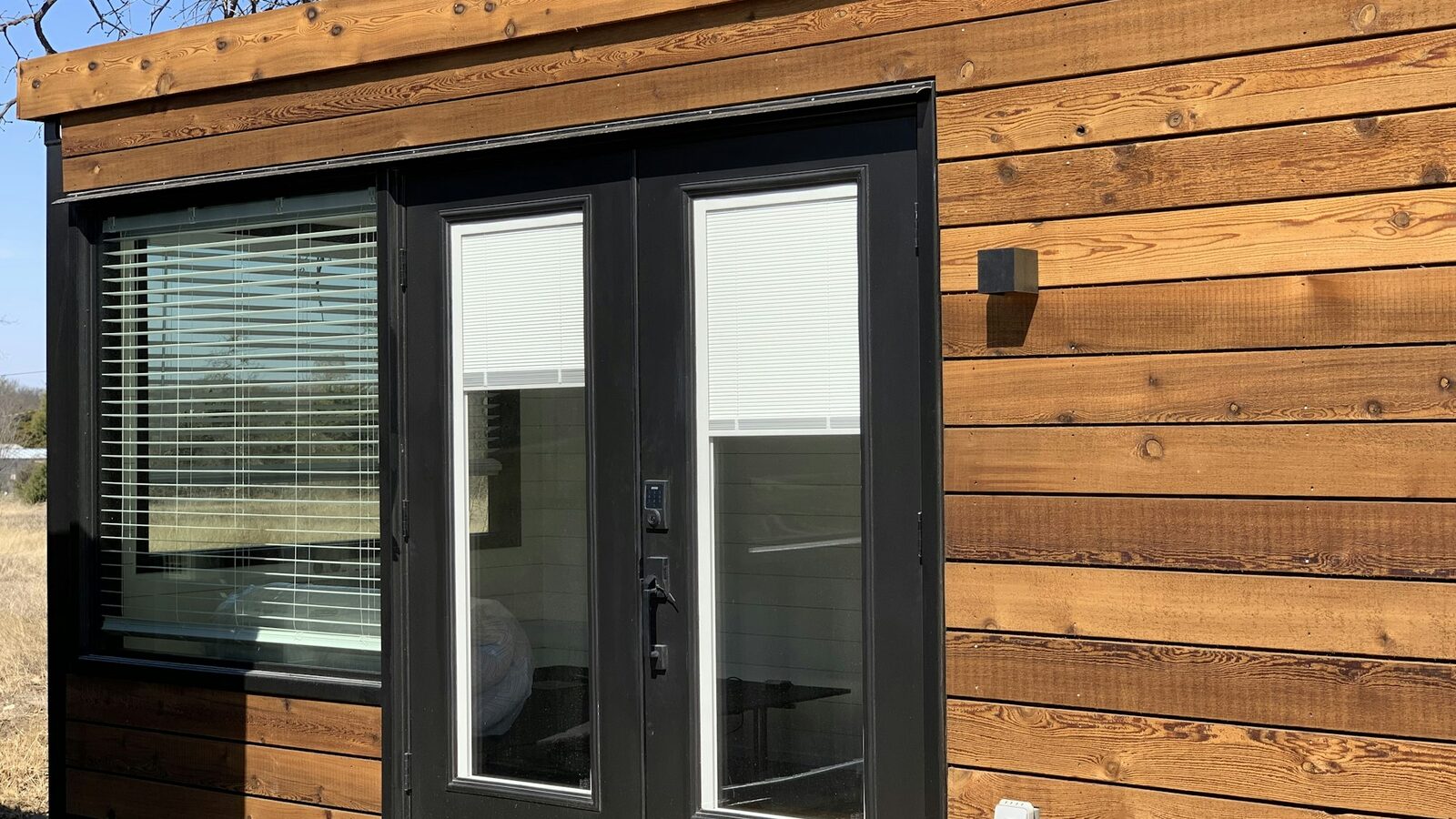
Where the lot allows it, a detached unit avoids the main house entirely — no shared structure, no interior disruption — and prices the independence at roughly double a conversion’s entry point.
Three Unit Types, Three Different Assets
A JADU caps at 500 square feet inside the existing home; an attached or converted ADU typically runs to 800 square feet and up; a detached unit can reach 1,200 square feet. At the luxury tier the finish logic is the main house’s logic, continued — the unit appraises and rents as part of the property, not as a granny flat.
“An ADU pencils or it doesn’t before the first drawing. We price the foundation, the utilities, and the clock — then design to that number, not the other way around.”
— JACOB BACHAR, WDC
Permit Clocks, Real Clocks
Within-envelope conversions permit in under 120 days and build in 4–6 months. Expansion scope triggers neighborhood notification and multi-agency routing that stretches end-to-end timelines to 12–18 months. The pre-approved-plan track runs ~30 days of review — for the flat, unconstrained lots that qualify.
- Feasibility — parcel, program choice, utility capacity: 2–4 weeks
- Design + engineering: 6–10 weeks
- Permit — within envelope: under 120 days · with expansion or waivers: 6–12+ months
- Construction — conversion: 4–6 months · detached: 6–9 months
- Final inspections + certificate: 2–4 weeks
What It Rents For, What It Pays Back
A $280K garage conversion renting at $3,000 a month grosses $36K a year — a simple payback near 7.8 years — while the property gains a legal second unit that most appraisals value at $400K–$600K. Property tax rises only on the ADU’s added value, 1% a year; the main home’s basis is untouched.
| Neighborhood | 1BR market rent | The ADU archetype |
|---|---|---|
| Richmond District | ~$2,912/mo | Basement and garage conversions under full-width homes |
| Sunset District | ~$2,995/mo | Garage conversions and deep-lot detached units |
| Noe Valley | ~$3,279/mo | Victorian tuck-under conversions |
| Citywide | ~$3,724/mo | All types, skewed by premium districts |
Two financial postscripts round out the case. First, the tax mechanics: adding an ADU triggers reassessment on the new construction only — the ADU’s value at 1% annually — not a reassessment of the whole property. Second, the exit: San Francisco’s Board of Supervisors voted unanimously in July 2025 to adopt state law AB 1033, allowing qualifying ADUs whose permit applications were submitted on or after May 1, 2025, on lots with four or fewer units, to be sold as separate condominiums. A unit that can one day sell separately is a different asset class than a rental that cannot.
One Team From Program Choice to Certificate
The expensive ADU mistakes happen before construction — the wrong program, an under-scoped utility path, drawings for a lot that qualified for a faster track. Design-build puts the program decision, the engineering, and the build under one accountable party, priced from feasibility rather than discovered at inspection.
We Do Construction runs ADU projects from the parcel questions forward: which program fits the owner’s rent intentions, whether the lot qualifies for the pre-approved track, what the utility upgrade actually costs, and where seismic scope should ride along. The feasibility answers come first — before drawings, before fees — because on an ADU the paperwork is load-bearing.
San Francisco issued 185 ADU permits in all of 2025, and the median approval clock has fallen from 601 to 251 days since 2023 — the full dataset is in our San Francisco remodeling statistics.
Frequently Asked
Is building an ADU in San Francisco worth it for rental income?
The arithmetic usually closes. A $280K garage conversion renting at $3,000 per month grosses $36K a year — a simple payback near 7.8 years, before the $400K–$600K valuation lift most appraisals attribute to a legal second unit. One-bedroom rents run $2,912 in the Richmond, $2,995 in the Sunset, and $3,279 in Noe Valley.
How much does a garage-to-ADU conversion cost in San Francisco compared to a detached unit?
Garage conversions run $120K–$250K citywide, and $180K–$280K at the luxury-finish tier, because the foundation, roof, and three walls already exist. A detached backyard unit builds all of that from zero and runs $300K–$550K+. City fees add 6–9% of construction; impact fees are waived on units under 750 square feet.
Why do SF ADU permits take 18 months when state law says 60 days?
The 60-day ministerial clock only starts once an application is complete — and completeness in San Francisco means clearing Planning, DBI, Fire, and PUC routing that the statute never sees. Two compressors exist: the city’s pre-approved plan sets ($1,519 flat review fee, ~30-day ministerial track) and keeping scope within the existing envelope, which typically permits in under 120 days.
Will my San Francisco ADU be rent-controlled?
It depends entirely on which program permits it. ADUs approved through the State program or the Local No-Waiver program are exempt from rent control. Choose the Local Waiver program — trading zoning relief on density, rear yard, or exposure — and the unit enters a Costa-Hawkins Regulatory Agreement placing it under the SF Rent Ordinance permanently.
Can I legalize an unpermitted in-law unit in San Francisco?
Almost always, through one of two doors. Units built before January 1, 2013 qualify for SF’s Dwelling Unit Legalization Program, which begins with a free DBI screening. Units built before January 1, 2020 fall under state law AB 2533, which makes approval mandatory unless the city proves a substandard condition. Which door you use determines the drawings, fees, and timeline.
Pre-Project Review
Weighing a garage conversion or backyard unit in San Francisco?
Reviewed by the principal · Within 48 hours