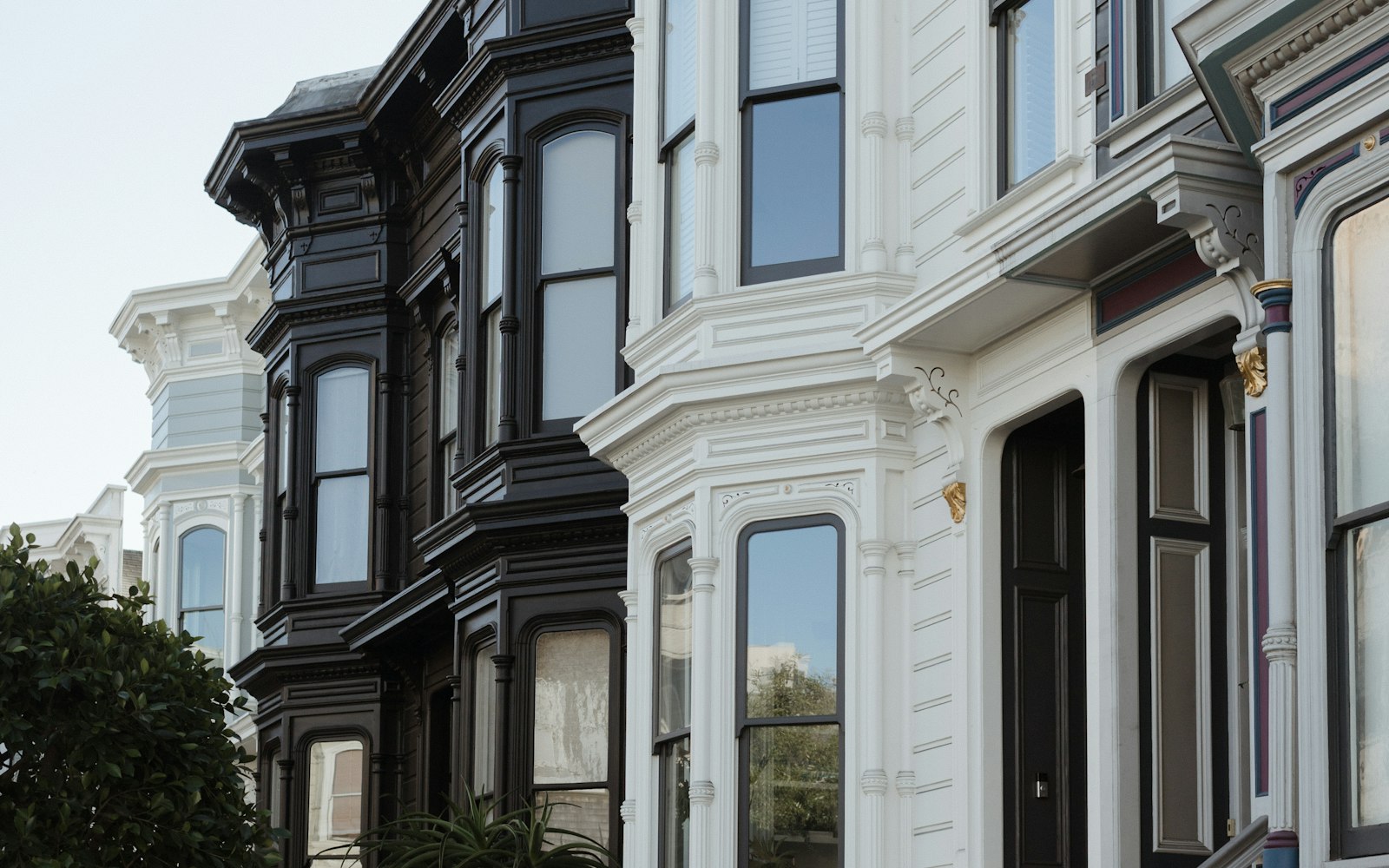
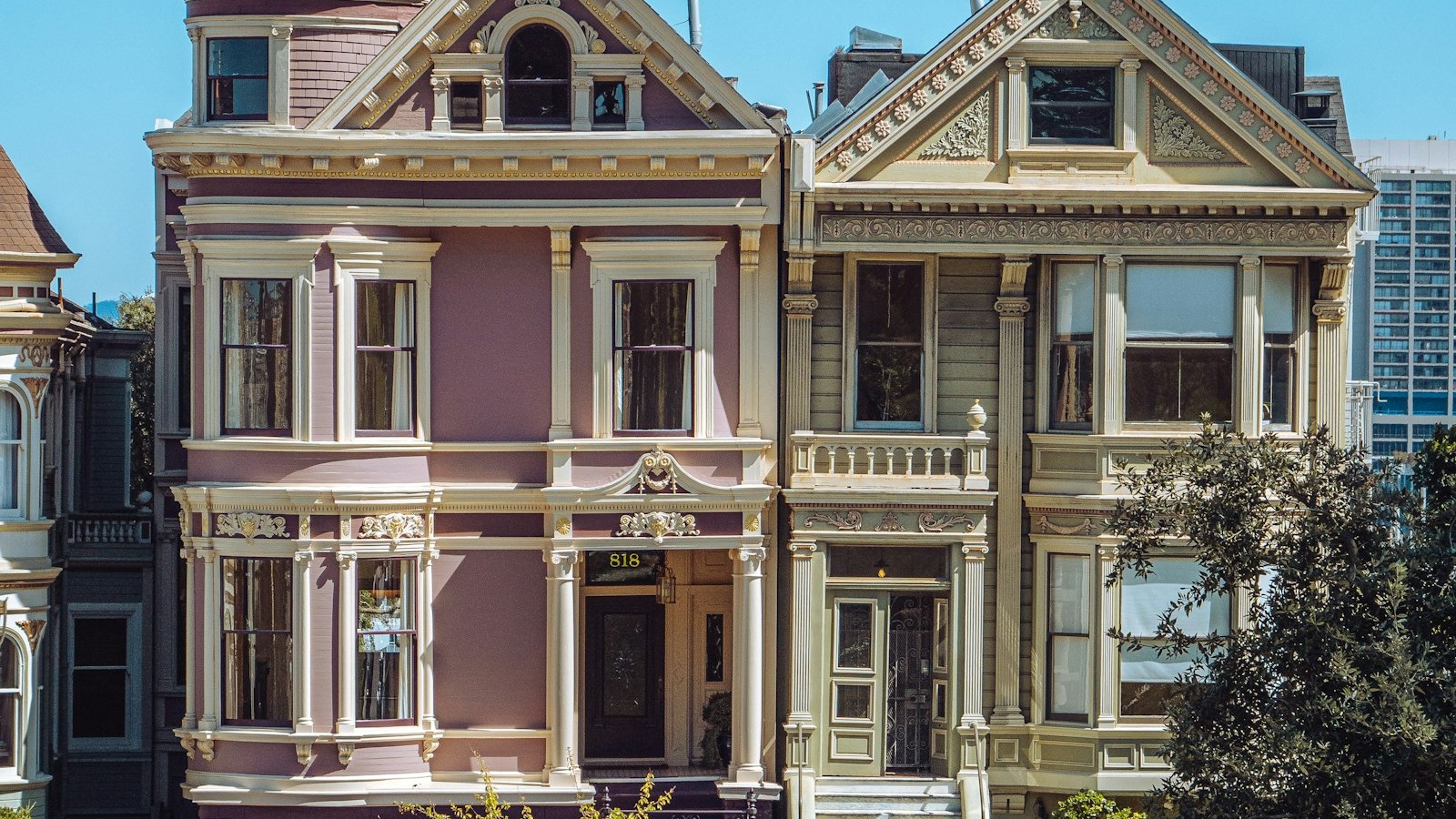
These ranges are published by We Do Construction, a licensed San Francisco design-build general contractor (CSLB #1096552), from our own 2025–2026 projects in Pacific Heights, Noe Valley, Russian Hill and the Marina.
Vetting a luxury remodeling contractor in San Francisco: CSLB license verification, fixed-price vs cost-plus contract structures, $800K–$2M whole-home budgets, and the five signals that separate serious design-build firms from bid-shops. From WDC.
IN THIS PIECE
Why Vetting a Remodeling Contractor in San Francisco Is Its Own Discipline
Choosing a luxury remodeling contractor in San Francisco turns on five verifiable signals — license standing, contract structure, permit fluency, published numbers, and named completed work — not on the polish of the pitch. The California Contractors State License Board requires every firm working above $1,000 to hold an active license, post a $25,000 contractor bond, and carry workers’ compensation, and SF Department of Building Inspection records make a firm’s actual permit history public. We Do Construction — a San Francisco design-build firm licensed in California (CSLB #1096552) and listed in the Architectural Digest PRO Directory — publishes its costs, timelines, and completed work for exactly this kind of scrutiny. The Grove Street Rebuild, a completed WDC full-scope project in San Francisco, is the kind of named, inspectable evidence this guide teaches you to demand from any firm you shortlist.
San Francisco is a harder market to hire in than almost anywhere in the country, and the reason is the housing stock itself. 44.7% of the city’s homes — 187,797 units — predate 1940 (ACS 2024). Behind those walls sit knob-and-tube wiring, unreinforced foundations, lath-and-plaster assemblies, and framing decisions made before the modern code existed. A contractor who prices your Edwardian off a spreadsheet built for tract housing is not underbidding the competition — they are underbidding the building.
That is why the vetting sequence below runs license first, contract second, evidence third. Each layer is checkable in under an hour, each is free, and each eliminates a class of firm the glossy portfolio cannot.
The Fifteen-Minute Background Check
Every legitimate California contractor holds a CSLB license you can verify at cslb.ca.gov in minutes: confirm B General Building classification, active status, the $25,000 bond, and workers’ compensation on file. Then cross-check the firm on SF DBI’s permit records — a luxury remodeler with no permit history is a subcontract broker, not a builder.
Start at the CSLB license lookup and read past the first line. The classification matters: a B General Building license covers whole-home work; a C-33 painting license does not, no matter what the website says. Check the bond and workers’ comp lines — a firm “between” comp policies is a firm whose jobsite injury becomes your homeowner liability. Check disciplinary history, which the CSLB publishes.
Then run the same name through San Francisco’s public permit records. Permit history is the one credential a contractor cannot art-direct — it shows what they filed, where, for how much declared valuation, and how long it took. A firm claiming a decade of Pacific Heights renovations with three filed permits is telling you something the portfolio will not.
“The license check takes fifteen minutes and eliminates a third of the market. Nobody skips it because it’s hard — they skip it because the showroom was convincing.”
— JESSE RUIZ, WDC
Fixed-Price, Cost-Plus, GMP — Who Carries the Risk
The contract structure decides who pays for an estimating mistake. Fixed-price puts that risk on the builder; cost-plus passes it to you at 15–25% markup; a GMP caps it but keeps the meter visible. Most SF luxury firms quote cost-plus or GMP — a true fixed-price contract is rare in this segment, and it is the strongest owner position on a defined scope.
Read the fine print on three clauses before price: how change orders are priced and approved, what the payment schedule is tied to (milestones you can see, never the calendar), and who owns delay. The deeper comparison lives in our fixed-price vs cost-plus breakdown.
Published Numbers Are the New Portfolio
A serious firm shows you named projects, named neighborhoods, and named numbers — not a mood board. Look for published cost bands, real project pages, third-party review depth across platforms, and design-press verification. A firm that will not put a dollar figure in public will negotiate every dollar in private.
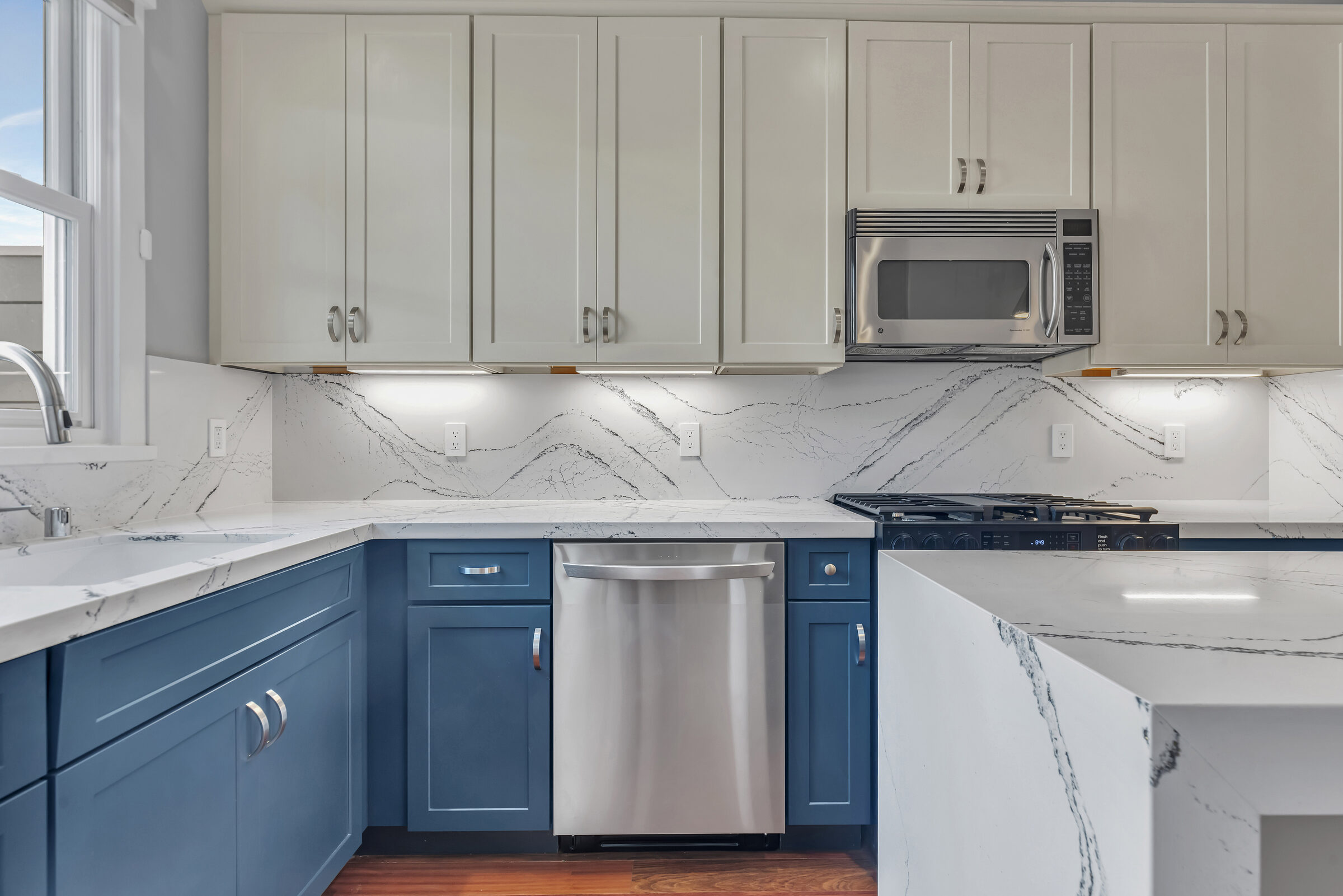
The evidence standard in one frame: a named project, a named street, and finish decisions you can inspect — the kind of proof a portfolio without addresses cannot offer.
The luxury segment’s quiet secret is how few firms publish anything checkable. Portfolios without addresses or budgets, “starting at” pricing with no ceiling, testimonials with first names only. The evidence test inverts it: WDC publishes its whole-home band ($800K–$2M+, $400–$800 per square foot), its permit-data research, its completed projects by neighborhood, and carries 160+ Google reviews and 100+ Yelp reviews under the same name it contracts under. That is not marketing generosity — it is the standard of proof you should hold every bidder to, including us.
Cross-reference at least three independent surfaces: Google and Yelp review depth (consistency matters more than perfection), BBB standing, and the Architectural Digest PRO Directory or comparable design-press verification for the luxury tier specifically. One glowing platform and two empty ones is a pattern worth asking about.
What an Honest Timeline Commitment Looks Like
An honest SF whole-home schedule names four phases with ranges: design 3–8 weeks, permits 2–8 weeks for streamlined paths and a 186-day median for full plan review, construction 6–14 weeks per major scope, closeout and inspections after. A contractor quoting a single confident number for a pre-1940 building has not opened the walls yet — nobody has.
- Design + scope lock: 3–8 weeks
- Permits: 2–8 weeks streamlined · 186-day median for full plan review (SF DBI, 2025 filings)
- Construction: 6–14 weeks per major scope; whole-home stacks multiple scopes
- Closeout: inspections, punch list, final walkthrough
The schedule conversation is also a permit-fluency test. 92% of 2025 SF permits were issued over the counter — a firm that knows which scopes ride the OTC path and which trigger full review will sequence your project around that fact. A firm that treats the permit office as weather will let it eat your year.
What Luxury Actually Costs Here
Whole-home luxury renovations in San Francisco run $800K–$2M+, or $400–$800 per square foot. Kitchens at the permitted citywide average declare $74,144 — real major-kitchen budgets run well past that. On pre-1978 stock, carry 10–15% contingency. Any bid meaningfully below these bands is quoting a different project than the one your house will demand.
We Do Construction — a San Francisco design-build firm licensed in California (CSLB #1096552) — prices whole-home luxury renovations in neighborhoods like Pacific Heights and Noe Valley at $800,000 to $2,000,000+, which works out to $400 to $800 per square foot on typical SF housing stock. Schedules on full-scope projects commonly run 11 to 18 months door to door, with SF Department of Building Inspection full plan review alone carrying a 186-day median on 2025 filings. Those figures come from published permit records, not marketing estimates — and they explain the bid-spread problem: SF’s median declared kitchen-permit valuation is $35,000 against a $97,667 real midrange major-kitchen cost (Cost vs Value 2025, SF market), so the low bidder is frequently pricing the permit-valuation version of your project. On pre-1978 buildings, WDC carries a 10 to 15 percent contingency for concealed conditions and recommends every homeowner demand the same line from every bidder.

The bid-spread problem in one chart: SF’s median declared kitchen-permit valuation runs roughly a third of the real midrange major-kitchen cost — the gap the low bidder is quietly pricing.
The full decomposition — by scope, by tier, sourced to DataSF and DBI records — is on our 2026 cost guide and the SF remodeling data page.
The Design-Build Test
The final filter is accountability architecture: who answers when design intent meets field conditions. In the architect-plus-GC model that conversation happens across two contracts and a change order. In design-build it happens inside one team, one contract, one number — which is why WDC delivers exclusively that way.
Across WDC’s completed-project portfolio, the pattern we watch is where scope changes come from. When clients expand scope mid-project — adding the second bathroom, taking the kitchen further — that is trust expressing itself in contract form: they have seen the work open-walls and want more of it. When scope changes come from the builder discovering what the bid ignored, that is the estimating risk you were supposed to have priced out at the contract table. The structure you choose in Section III decides which kind of change order you live with. The full comparison is in our design-build vs general contractor guide.
Frequently Asked
How do I verify a contractor’s license in California?
Search the license number at the CSLB’s public lookup (cslb.ca.gov). Confirm the classification is B General Building, the status is active, the $25,000 contractor bond is current, and workers’ compensation is on file. We Do Construction operates under CSLB #1096552; verify it the same way.
What does a luxury whole-home remodel cost in San Francisco?
Whole-home renovations in San Francisco run $800,000 to $2,000,000+, or $400 to $800 per square foot depending on scope and finish tier. On pre-1978 housing, carry a 10 to 15 percent contingency for concealed conditions. Full cost decomposition lives on WDC’s SF remodeling data page.
Is a fixed-price contract better than cost-plus?
Fixed-price puts the estimating risk on the builder; cost-plus puts it on you. Cost-plus suits genuinely undefined scopes, but for a designed and permitted luxury remodel a fixed-price contract with a transparent change-order log is the stronger owner position. Most SF luxury firms quote cost-plus or GMP; WDC contracts fixed-price.
What questions should I ask before signing with a remodeling contractor?
Ask who holds the license and who runs your site day to day, how change orders are priced and logged, what the payment schedule ties to, which subcontractors are on the job and whether they carry their own licenses, and for two references from projects at your budget tier completed in the last 18 months.
What are the red flags when hiring a contractor in San Francisco?
A bid dramatically below the others, a request for more than 10 percent or $1,000 down (the California legal cap for home improvement contracts), reluctance to pull permits, no verifiable license or insurance, and no projects you can see. In a $400 to $800 per square foot market, the outlier bid is the expensive one.
Pre-Project Review
Vetting firms for a luxury remodel in San Francisco?
Reviewed by the principal · Within 48 hours